
Wind-Cold-Dispersing Herbs
Fresh Ginger (Sheng Jiang)


Name
Sheng Jiang (fresh ginger, Rhizoma Zingiberis Recens), recorded in the Mingyi Bielu.
Source and quality
Plant
The fresh rhizome of Zingiber officinale Roscoe, family Zingiberaceae.
Where it is grown
Grown throughout China.
Harvest
Autumn and winter.
Smell and taste
Aromatic and acrid.
Better grade
Large, plump, tender rhizomes.
Processing
Sliced; used raw, roasted, or as juice.
Nature and action
Acrid, warm; enters lung, spleen and stomach. Disperses wind-cold; warms the middle to stop vomiting; warms the lung to ease cough.
When it is used
Mild wind-cold
Fresh ginger is a mild exterior herb. For a light wind-cold it can be used alone or simmered with scallion and brown sugar. In stronger formulas it supports Gui Zhi, Qiang Huo and other warm, acrid exterior herbs.
Stomach cold and vomiting
It warms the middle, wakes appetite, and is the usual first thought for vomiting from stomach cold. For severe cold it is paired with Gao Liang Jiang or Hu Jiao; for spleen-stomach qi deficiency with Ren Shen and Bai Zhu. For vomit from stomach heat it is only an assistant next to Huang Lian or Zhu Ru. For phlegm-damp vomit it is classically paired with Ban Xia (Xiao Ban Xia Tang), which also reduces Pinellia’s raw toxicity.
Cough from lung cold
It warms the lung. For wind-cold cough it is used with Ma Huang (San Ao Tang). For phlegm without a clear exterior pattern, with Ban Xia and tangerine peel (Er Chen Tang).
It is also the standard kitchen-level offset for raw Ban Xia and raw Tian Nan Xing, and in the old literature for fish or crab poisoning. Classical first-aid notes mention ginger decoction or a few drops of juice at the nose in sudden fainting. That is historical usage. Fainting now is emergency care, not ginger in the nostril.
Dose
Decoction 3–10 g. Ginger juice, when used at all in the old sources, is a separate, stronger preparation. Roasted ginger is chosen when the aim is to warm the middle and stop vomit without as much surface scatter. If acrid-dispersing herbs are the wrong class for the case, roasted ginger is still not automatic.
Cautions
Use carefully in yin deficiency with interior heat, or in exuberant heat: ginger can fan fire and further injure yin.
Sources and further reading
We cite classical materia medica and modern reference works. This article is health education, not medical advice.
- Shennong Bencao Jing (The Divine Farmer's Materia Medica), Han dynasty.
- Bencao Gangmu (Compendium of Materia Medica), Li Shizhen, 1578.
- Chinese Pharmacopoeia, current edition — identity, quality and safety monographs.
- NCCIH and WHO reference material on traditional medicine safety.
Spotted an error or a better source? Tell us — corrections are logged on our editorial policy page.
Did this article help you?
Your answer shapes what gets rewritten next.
Keep readingRelated entries
 Xiang Ru (Mosla): Summer Cold, Damp and Edema
Xiang Ru (mosla, Herba Moslae ), recorded in the Mingyi Bielu . The aerial parts of Mosla chinensis Maxim., including the cultivated form often sold a
 Zi Su Ye (Perilla Leaf) in TCM
Zi Su Ye (Perilla Leaf) disperses wind-cold, promotes the flow of qi and soothes the middle. It suits wind-cold exterior syndrome with qi stagnation. Do not.
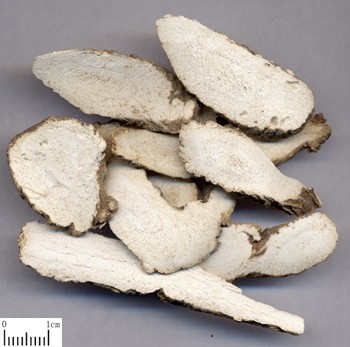 Bai Zhi (Dahurian Angelica): Headache, Nose and Leukorrhea
Bai Zhi (dahurian angelica root, Radix Angelicae Dahuricae ), recorded in the Shennong Bencao Jing . The root of Angelica dahurica (Hoffm.) Benth
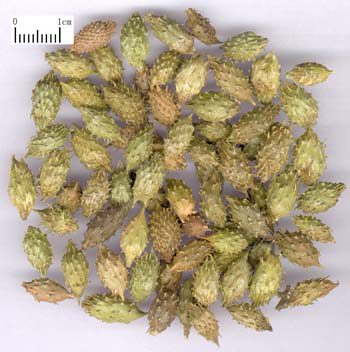 Cang Er Zi (Xanthium Fruit)
Cang Er Zi (xanthium fruit, Fructus Xanthii ), recorded in the Shennong Bencao Jing: Acrid, bitter, warm, toxic ; enters the lung. Disperses wind-cold; opens
Something this article did not cover?
Ask us directly. We reply within two days, and good questions become public articles.
Ask a question →