
Wind-Cold-Dispersing Herbs
Zi Su Ye (Perilla Leaf) in TCM
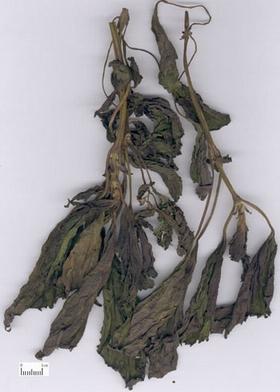
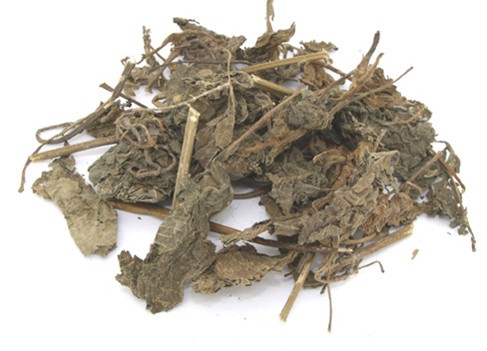
Name
Zi Su Ye (Folium Perillae), from Ming Yi Bie Lun (Miscellaneous Records of Famous Physicians)
Source and quality
The leaf, or the scion, of the annual herbaceous plant Perilla frutescens (L.) Britt. of the family Lamiaceae. It is produced in most parts of China, and is gathered in summer when the leaves are thriving and the inflorescence begins to sprout.
It has a fragrant odor and a slightly pungent taste. The best grade has large leaves, a purple color, no fragments, a dense fragrance, no stem or peduncle, and no impurities. It is used unprocessed.
Nature and action
Pungent and warm. It enters the lung, spleen and stomach meridians.
It disperses wind-cold, promotes the flow of qi and soothes the middle.
Indications
Wind-cold exterior syndrome
This herb has mild actions of expelling wind and dispersing cold, and it induces sweating to release the exterior. It can be used on its own for a mild pattern, but in serious illness it should be combined with other herbs that disperse wind-cold. Because it releases exterior cold, promotes the flow of qi and eases the middle energizer, and also resolves phlegm and stops cough, it suits wind-cold exterior syndrome with qi stagnation, marked by fullness and distension in the chest, vomiting and nausea, or cough with much phlegm.
It is always combined with herbs that regulate qi to soothe the middle, or herbs that resolve phlegm to stop cough.
- Xiang Su San is combined with Xiang Fu and Chen Pi for the former condition, from Tai Ping Hui Min He Ji Ju Fang.
- Su Xing San is combined with Xing Ren and Jie Geng to treat the latter condition, from Wen Bing Tiao Bian.
Stagnation of spleen and stomach qi, fullness in the chest and vomiting
This herb promotes the flow of qi to soothe the middle energizer and ease distension, harmonizes the stomach and stops vomiting, and it also has some effect on regulating qi to prevent abortion. With these actions it can be used for qi stagnation in the middle energizer, marked by fullness and distension in the chest and epigastrium, nausea and vomiting.
- Where cold predominates, it is always combined with Sha Ren and Lu Gen to clear the stomach and stop vomiting.
- Where heat predominates, add Huang Lian and Lu Gen.
- If fetal qi flows upward, with distension in the chest and vomiting and excessive fetal movement, it is always used with Sha Ren and Chen Pi, which regulate qi and prevent abortion.
- For plum-stone syndrome (globus hystericus) due to stagnation of the seven emotions, congealing of phlegm and stagnation of qi, herbs that eliminate phlegm and promote the flow of qi are often added, such as Ban Xia and Hou Po in Banxia Houpo Tang from Jin Kui Yao Lue.
Dosage and administration
Decoct 5~10 g. Do not decoct it for a long time.
Sources and further reading
We cite classical materia medica and modern reference works. This article is health education, not medical advice.
- Shennong Bencao Jing (The Divine Farmer's Materia Medica), Han dynasty.
- Bencao Gangmu (Compendium of Materia Medica), Li Shizhen, 1578.
- Chinese Pharmacopoeia, current edition — identity, quality and safety monographs.
- NCCIH and WHO reference material on traditional medicine safety.
Spotted an error or a better source? Tell us — corrections are logged on our editorial policy page.
Did this article help you?
Your answer shapes what gets rewritten next.
Keep readingRelated entries
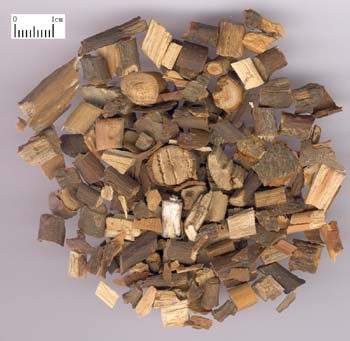 Gui Zhi (Cassiabarktree branchlet)
: induce sweating and release exterior, warm and unblock the meridians, warm and reinforce the yang qi.
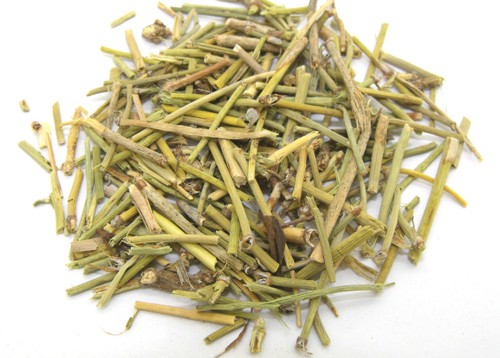 Ma Huang (Ephedra): Uses, Forms, Dose and Safety
Ma Huang (ephedra stem, Herba Ephedrae ), recorded in the Shennong Bencao Jing . The herbaceous stems of Ephedra sinica Stapf, E
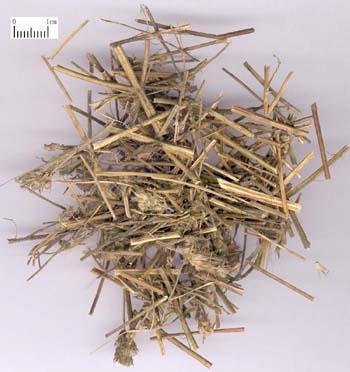 Xiang Ru (Mosla): Summer Cold, Damp and Edema
Xiang Ru (mosla, Herba Moslae ), recorded in the Mingyi Bielu . The aerial parts of Mosla chinensis Maxim., including the cultivated form often sold a
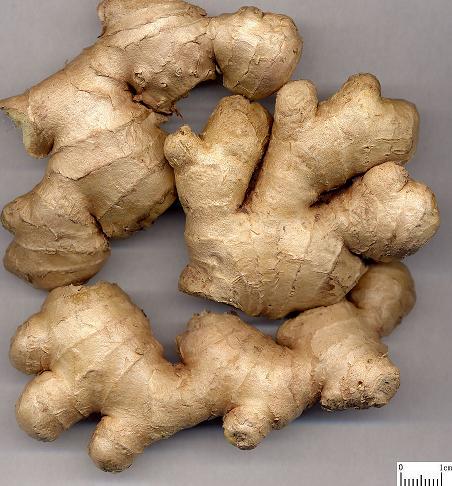 Fresh Ginger (Sheng Jiang)
Sheng Jiang (fresh ginger, Rhizoma Zingiberis Recens ), recorded in the Mingyi Bielu: Acrid, warm; enters lung, spleen and stomach. Disperses wind-cold; warms
Something this article did not cover?
Ask us directly. We reply within two days, and good questions become public articles.
Ask a question →