
Wind-Cold-Dispersing Herbs
Fang Feng (Siler Root)
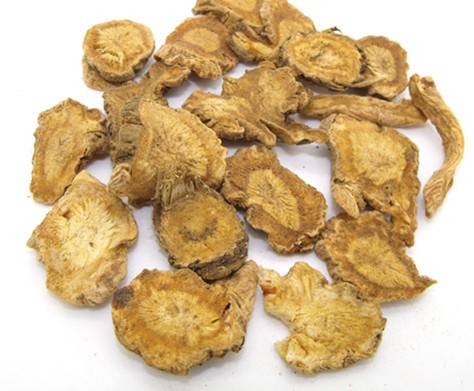
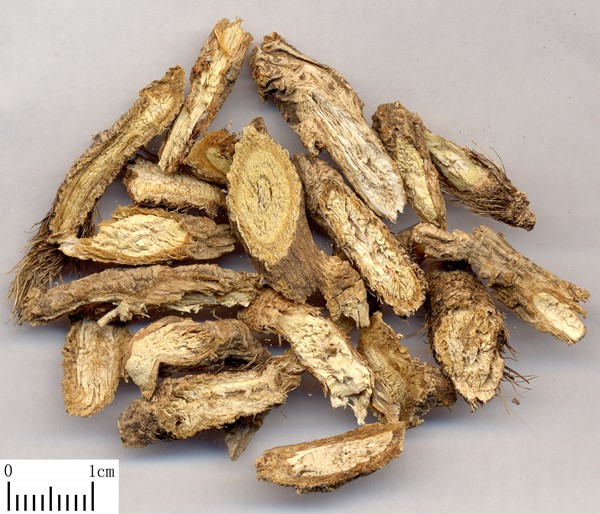
Name
Fang Feng (siler root, Radix Saposhnikoviae), recorded in the Shennong Bencao Jing. The name means “guard against wind.”
Source and quality
Plant
The root of Saposhnikovia divaricata (Turcz.) Schischk., family Apiaceae.
Where it is grown
Mainly northeast China and eastern Inner Mongolia.
Harvest
Spring and autumn.
Smell and taste
Mildly aromatic; slightly sweet.
Better grade
Stout roots with dark brown skin; the bark on the cut face slightly brown, the wood grey-yellow.
Processing
Sliced; used raw, or stir-baked to charcoal.
Nature and action
Acrid, sweet, slightly warm; enters lung, liver and spleen. Dispels wind and releases the exterior; expels wind-damp; eases pain.
When it is used
Exterior wind-cold, wind-damp or wind-heat
Fang Feng is a mild, somewhat sweet wind herb, so it is used across several exterior pictures rather than only one. For wind-cold with headache and body ache, it is paired with other cold-dispersing herbs (Jing Jie and Qiang Huo in Jing Fang Bai Du San). For wind-damp with a wrapping headache and heavy limbs, it is paired with Qiang Huo and Chuan Xiong in Qiang Huo Sheng Shi Tang. For wind-heat with fever, sore throat and thirst, it is paired with Bo He and Lian Qiao.
Because it does not scatter as hard as some acrid herbs, it is also used when the exterior is already weak and wind-cold is still present. Combined with herbs that support defensive qi — Huang Qi and Bai Zhu in Yu Ping Feng San — it is the classic “support the upright, expel the pathogen” trio.
Itching and wind-type rashes
It is used for wind-led itching and urticaria, often with Bo He, Chan Tui and Bai Xian Pi. When the picture is more blood-dryness than surface wind, it is combined with blood-nourishing herbs such as Dang Gui, Sheng Di Huang and Mu Dan Pi.
Wind-damp bi and spasm
For joint pain and sinew tightness from wind-cold-damp, it is used with Qiang Huo, Gui Zhi and Jiang Huang (as in Juan Bi Tang). For hot, red, swollen joints it can sit with heat-clearing, damp-expelling herbs such as Yi Yi Ren. It is also in older tetanus formulas (Yu Zhen San) for interior wind with stiffness — that is a historical indication, not a home treatment for lockjaw.
Dose
Decoction 5–10 g.
Cautions
Use carefully when there is blood deficiency or interior wind from heat: the herb is still warm.
Sources and further reading
We cite classical materia medica and modern reference works. This article is health education, not medical advice.
- Shennong Bencao Jing (The Divine Farmer's Materia Medica), Han dynasty.
- Bencao Gangmu (Compendium of Materia Medica), Li Shizhen, 1578.
- Chinese Pharmacopoeia, current edition — identity, quality and safety monographs.
- NCCIH and WHO reference material on traditional medicine safety.
Spotted an error or a better source? Tell us — corrections are logged on our editorial policy page.
Did this article help you?
Your answer shapes what gets rewritten next.
Keep readingRelated entries
 Cong Ye (Folium Allii Fistulosi)
Fistular Onion Leaf: expel wind and induce sweating, remove toxicity and resolve swelling.
 Cong Bai (Bulbus Allii Fistulosi)
Cong Bai (Fistular Onion Stalk) Acrid, warm; lung and stomach channels. Actions Dispel wind-cold, and invigorate yang
 Jing Jie (Schizonepeta): Uses, Charred Form and Dose
Jing Jie (schizonepeta, Herba Schizonepetae ), recorded in the Shennong Bencao Jing . The flowering spikes are Jing Jie Sui
 Yuan Sui Zi (Coriander Fruit)
: promote the eruption of poxes, stimulate the appetite.
Something this article did not cover?
Ask us directly. We reply within two days, and good questions become public articles.
Ask a question →